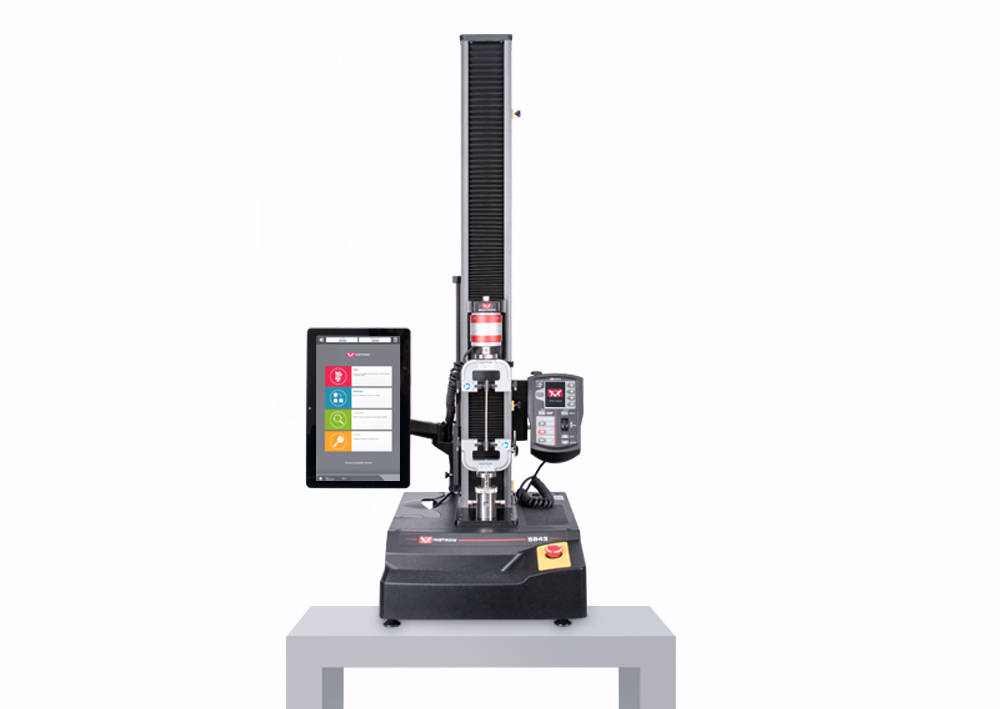
Description
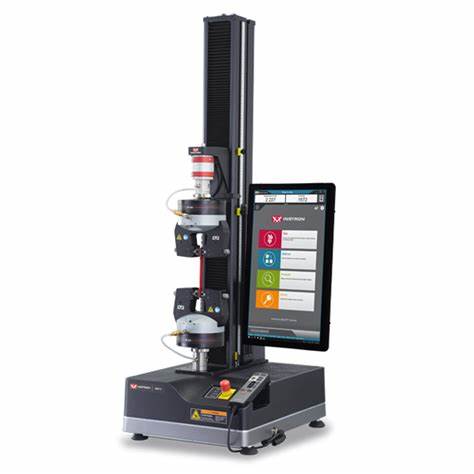
Tensile testing is a fundamental materials science and engineering test in which a sample is subjected to a controlled tension until failure. The test input parameters include test speed, distance between grips, and type of fixture used to grip. Properties that are directly measured via a tensile test are ultimate tensile strength, breaking strength, maximum elongation, and reduction in area. From these measurements the following properties can also be determined: Young’s modulus, Poisson’s ratio, yield strength, and strain-hardening characteristics. Uniaxial tensile testing is the most commonly used for obtaining the mechanical characteristics of isotropic materials, bi-axial direction can also be tested.
Tensile testing is most often carried out at a material testing laboratory. The ASTM D638 is among the most common tensile testing protocols. The ASTM D638 measures plastics tensile properties including ultimate tensile strength, yield strength, elongation and Poisson’s ratio.